

When Should You Start Abacus Classes for Your Child?
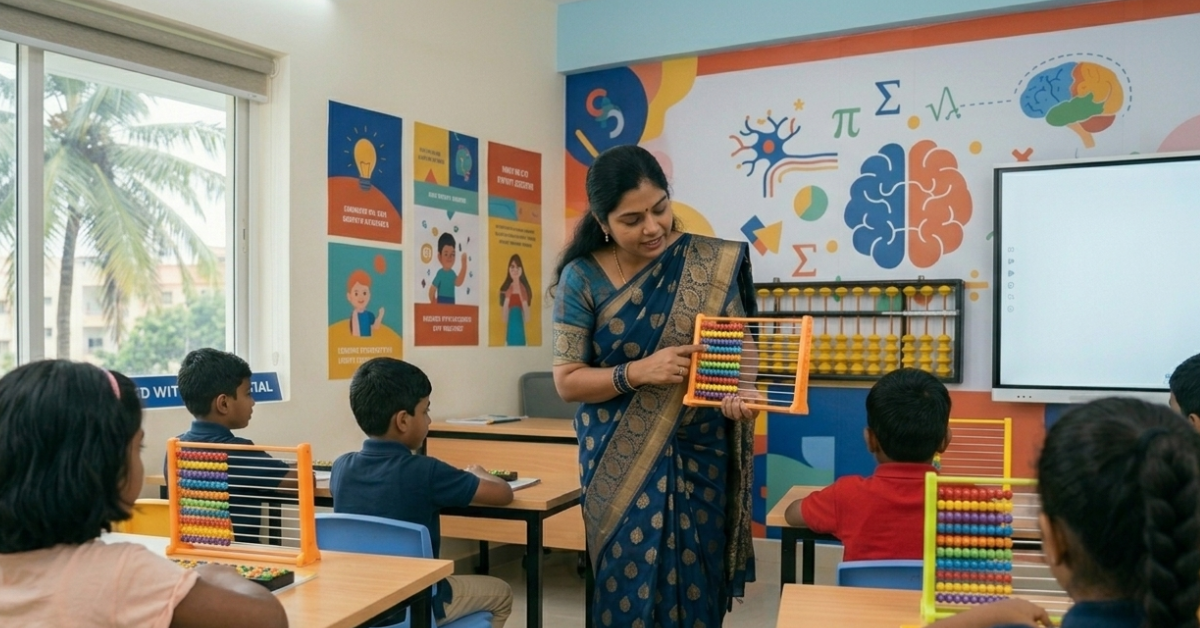
Parents today are constantly looking for ways to help their children develop strong learning skills from an early age. Among the many educational programs available, abacus classes have gained popularity for their ability to improve mental math, concentration, memory, and overall cognitive development.
But one question many parents ask is: When is the right age to start abacus classes for a child?
In this article, we’ll explore the ideal age to begin abacus training, the benefits children gain at different stages, and how early learning can shape a child’s academic future.
Understanding Abacus Learning
An abacus is a simple counting tool that has been used for centuries to perform arithmetic calculations. Modern abacus classes teach children to use the physical abacus first and gradually transition to visualizing the beads mentally. This process helps children perform calculations quickly in their minds without relying on calculators.
Beyond mathematics, abacus training stimulates both sides of the brain, enhancing important skills such as:
- Concentration
- Memory retention
- Visualization
- Logical thinking
- Problem-solving
- Confidence in academics
What Is the Ideal Age to Start Abacus Classes?
Most experts recommend starting abacus classes between the ages of 5 and 14 years. However, the ideal starting age is generally considered to be 5 to 8 years.
At this stage, children:
- Have developed basic number recognition skills.
- Can understand simple instructions.
- Are highly receptive to new learning methods.
- Have strong brain plasticity, making it easier to develop mental calculation abilities.
Starting during these formative years allows children to maximize the benefits of abacus training and build a strong foundation for future learning.
Why Starting Early Matters
1. Faster Brain Development
Young children learn patterns and concepts more quickly than older students. Early exposure to abacus classes helps stimulate neural connections responsible for memory, attention, and analytical thinking.
2. Improved Concentration
Many parents notice that children who attend abacus training become more focused during studies and daily activities. The practice of moving beads and visualizing calculations trains the brain to maintain attention for longer periods.
3. Strong Mental Math Skills
Children who start early often develop exceptional mental arithmetic abilities. They can perform addition, subtraction, multiplication, and division calculations much faster than their peers.
4. Increased Academic Confidence
Success in mental calculations boosts a child’s confidence in mathematics and other subjects. This positive attitude often leads to better classroom performance.
Can Older Children Join Abacus Classes?
Absolutely.
While starting early offers certain advantages, children aged 9, 10, 12, or even 14 can still benefit greatly from abacus classes. Older students often progress quickly because they already possess stronger mathematical understanding and learning discipline.
The key factor is not age alone but a child’s willingness to learn and practice consistently.
Signs Your Child Is Ready for Abacus Training
Your child may be ready for abacus classes if they:
- Can recognize numbers confidently.
- Show curiosity about counting and mathematics.
- Can focus on activities for 15–20 minutes.
- Follow simple instructions independently.
- Enjoy learning through interactive activities.
Even if your child struggles with mathematics, abacus training can help build confidence and improve their relationship with numbers.
Online vs Offline Abacus Classes
Modern technology has made abacus learning more accessible than ever. Parents can now choose between online and classroom-based training.
Online Abacus Classes
Online sessions offer:
- Learning from home
- Flexible scheduling
- Interactive digital learning tools
- Access to experienced trainers regardless of location
Offline Abacus Classes
Classroom sessions provide:
- Face-to-face interaction
- Structured learning environment
- Direct guidance from instructors
- Opportunities for peer learning
Both formats can be highly effective when delivered by experienced trainers using a structured curriculum.
Why Choose Velsai Abacus?
At Velsai Abacus, we understand that every child learns differently. Our carefully designed abacus classes help students develop strong mental math skills while enhancing concentration, memory, and overall cognitive abilities.
We offer:
- Expert abacus trainers
- Age-appropriate learning programs
- Personalized attention
- Regular progress tracking
- Engaging learning activities
- Convenient online and offline abacus classes
Whether your child is just beginning their learning journey or looking to strengthen their mathematical abilities, our programs are designed to support their growth every step of the way.
Final Thoughts
The best time to start abacus classes is usually between the ages of 5 and 8, when children’s brains are highly receptive to cognitive development. However, older children can also experience significant benefits from abacus training.
More important than the exact age is choosing a structured program that keeps children engaged, motivated, and progressing steadily. With consistent practice and expert guidance, abacus learning can help children develop lifelong skills that extend far beyond mathematics.
If you’re looking for a proven way to enhance your child’s mental math abilities, concentration, and confidence, Velsai Abacus offers both online and offline abacus classes to help your child succeed.